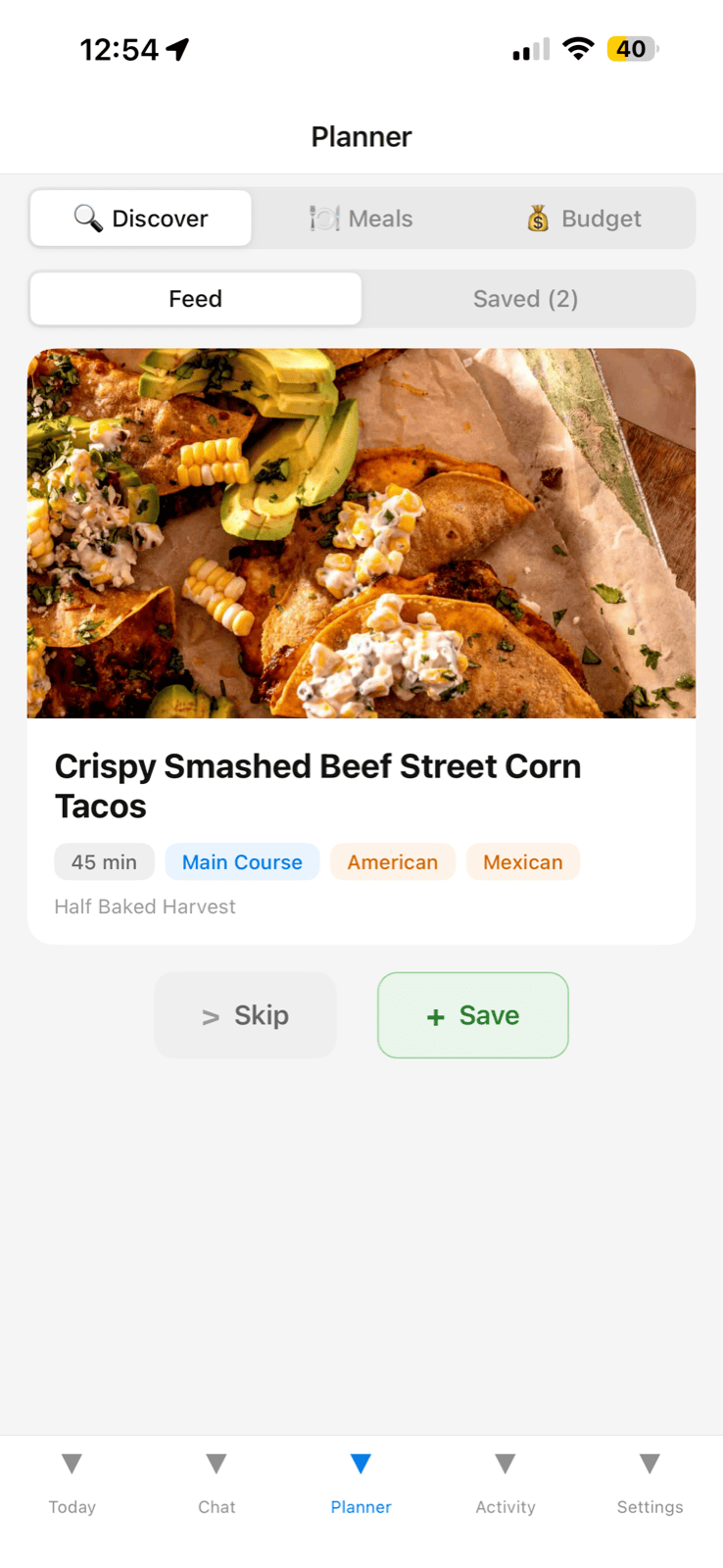
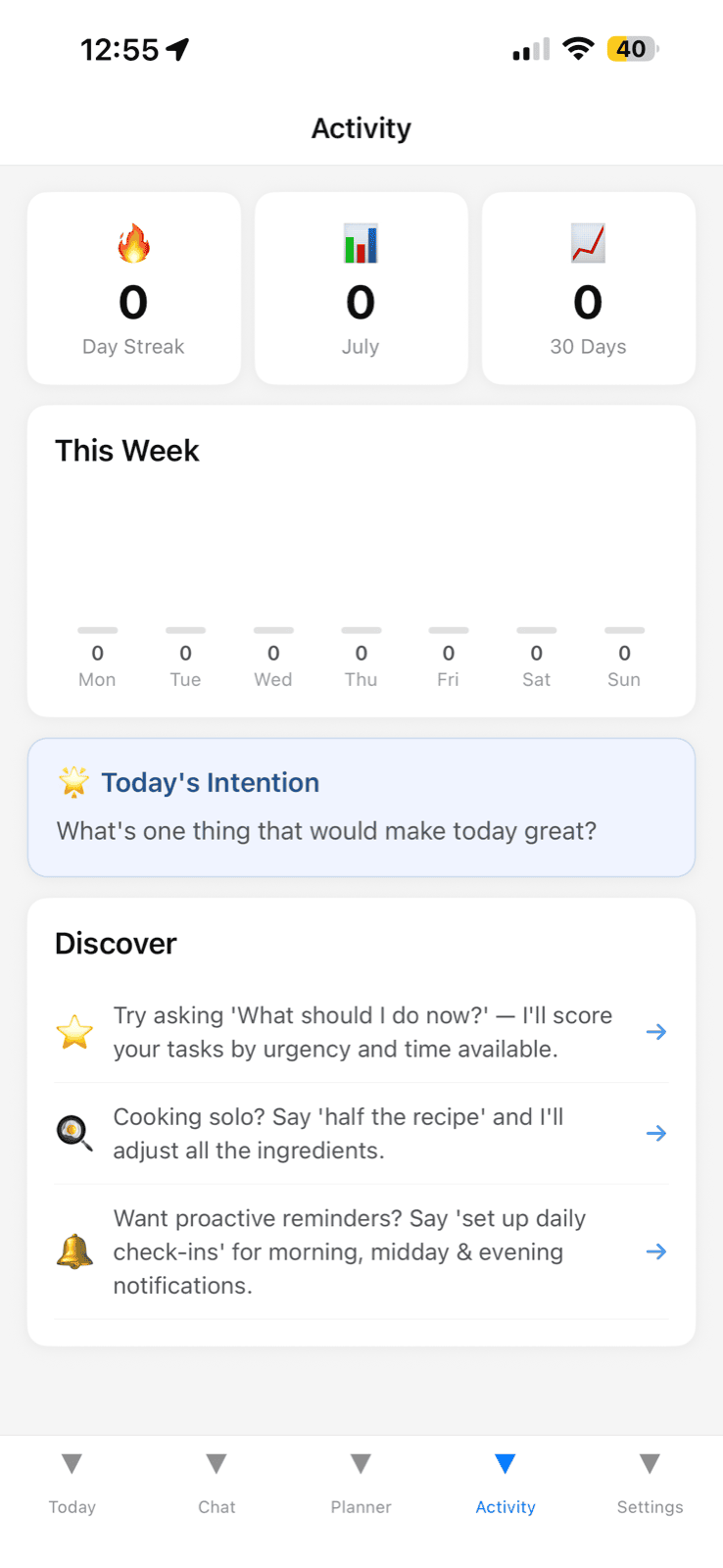
Family App
The AI assistant my own household runs on. No public users, no demo data. Real memory, real failover, real observability, because it has to actually work every day.

Why this exists
Every family logistics tool I’d tried treated calendar, reminders, budget, and meal planning as separate apps that didn’t talk to each other. This app is the opposite bet: 1 assistant that reads calendar and reminder data straight off the device, talks to the household budget API, holds a memory layer scoped per person and per household, and reasons over all of it in a single chat interface. It grew out of an earlier WhatsApp-based version of the same idea that worked until it didn’t: a provider outage or a dropped API call would fail silently, and nobody found out until something was visibly missing. This rebuild’s entire engineering story is about closing exactly those silent-failure paths.
Architecture
Every external call, device-native or cloud, goes through 1 generic resilience wrapper before it reaches anything else: a retry queue with exponential backoff and a per-integration circuit breaker, so a failing integration degrades instead of cascading. The chat backend’s own AI calls get the same treatment through a 3-tier provider chain: Claude first, OpenAI and then xAI Grok only on retriable failures, never on a 400-class bug. A structured log line and a 15-minute health-check cron sit downstream of all of it, watching for the specific failure shape (a technically-successful, functionally-empty response) that used to go unnoticed for days. Most runs end quietly at the mobile app. A detected failure instead produces a cooldown-gated push alert, so the household never has to be the one to notice something broke.
What shipped
35 specs took this from a WhatsApp bot that quietly dropped operations to a mobile app with a memory layer that keeps personal and household facts properly scoped, a 3-provider failover chain with a standing test path to verify it on demand, a generic retry-queue-and-circuit-breaker wrapper covering every external integration, a health-check cron that turns a silent failure into a 15-minute alert, and a native Siri and App Intents layer that finished the deep-link wiring an earlier feature had left half-done. It runs on 1 real household’s calendar, reminders, and budget every day. There’s no public URL for this one; it holds real family data, so the repo and the live instance both stay private. What’s shown here is the engineering, not the household.